Electromagnetism
- 3-axis magnetometer→ usual cause: metal object moved, motor
- 50 Hz pickup coil→ usual cause: wiring in the walls, appliance plugged in
- Electric-field antenna→ usual cause: static electricity, dry air
THE INVISIBLE · ELECTRONICS · 3D PRINTING
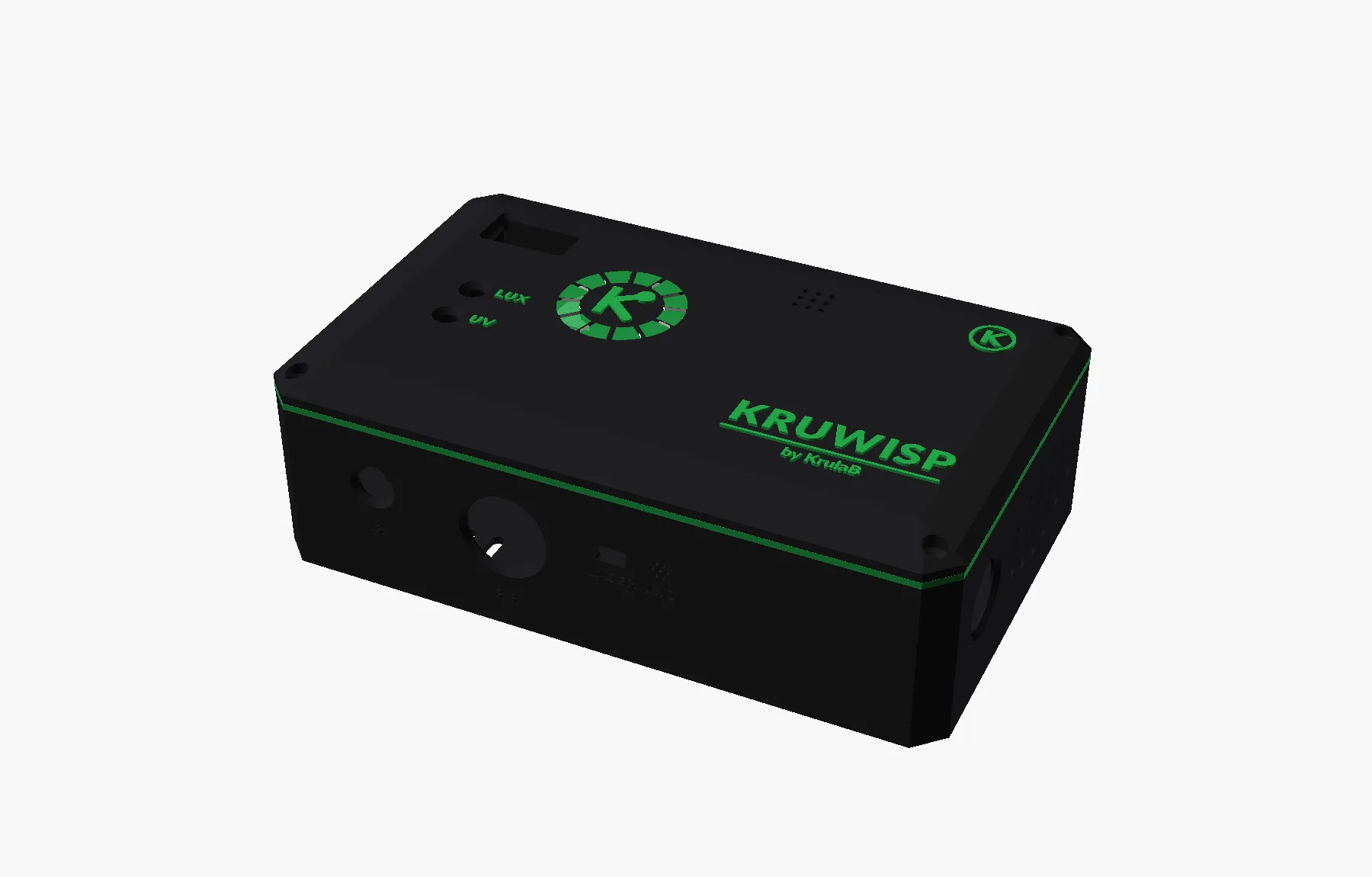
An experimental box carrying as many sensors as possible to measure what our senses perceive poorly: infrasound, fields, draughts, gases. Its goal: finding the ordinary physical cause of what people take for a “manifestation”.
THE NAME
Kru(lab) + will-o'-the-wisp: a phenomenon long thought supernatural, explained by the chemistry of marsh gases. The whole project rests on that idea.
SIMULATED DATA
Each sensor learns its baseline for a minute, then reports its deviations. A cross-checking engine (14 rules) then rules out what an ordinary cause explains. The index only rises when several sensor families vary together, with no explanation. Pick a situation:
EXPLAINED
Explained: a pressure jump, then cooler air and a vibration. The signature of a door or a window.
The main sensors, and the most common ordinary cause they help uncover. The phone adds its own (microphone, camera, motion) to the same dashboard.
01 · THE IDEA
Most “manifestations” have a measurable physical cause. In 1998, engineer Vic Tandy showed that a fan emitting infrasound around 19 Hz was enough to cause unease and visual illusions. Carbon monoxide, for its part, causes real hallucinations.
02 · WHAT I BUILT
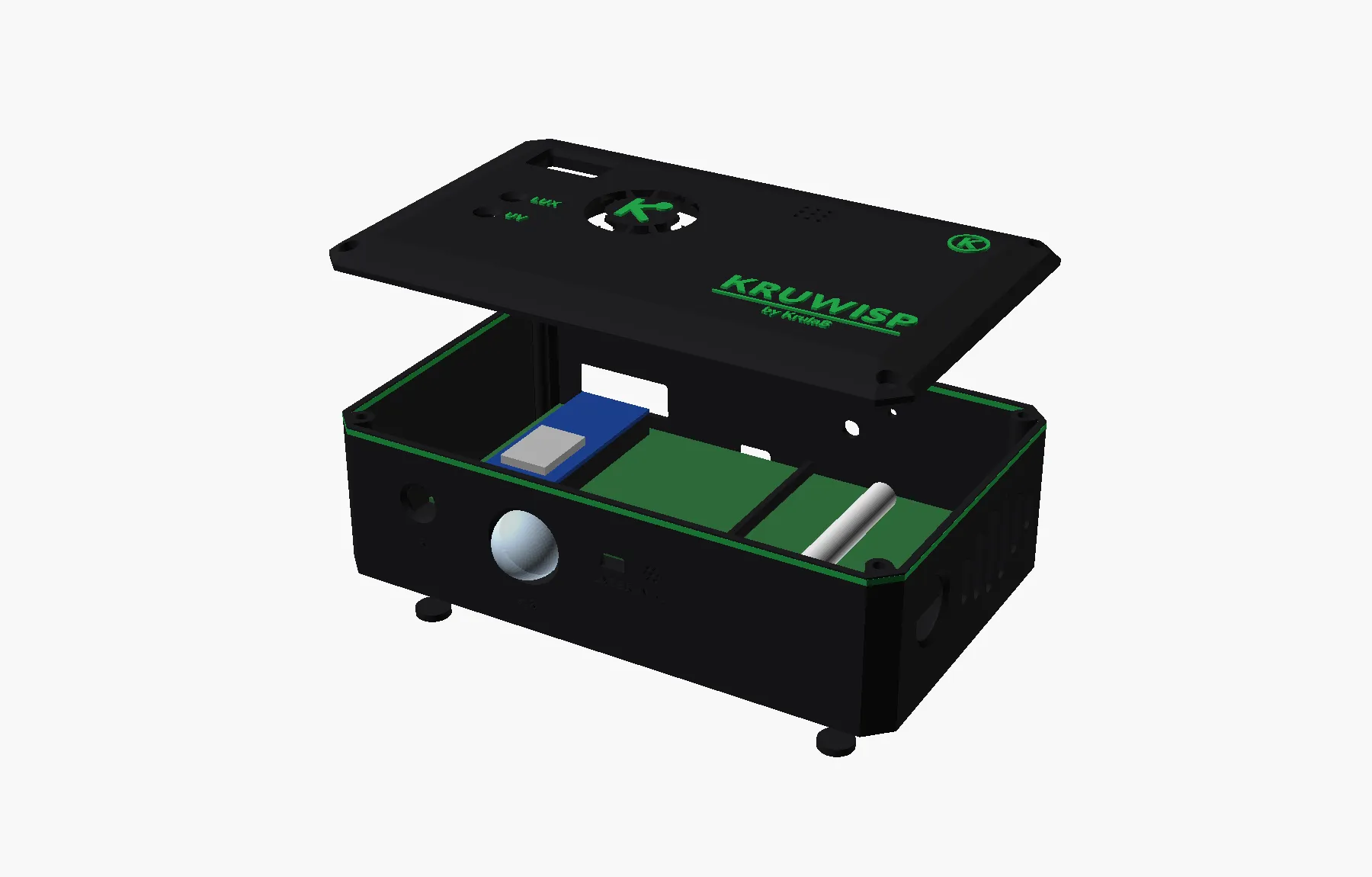
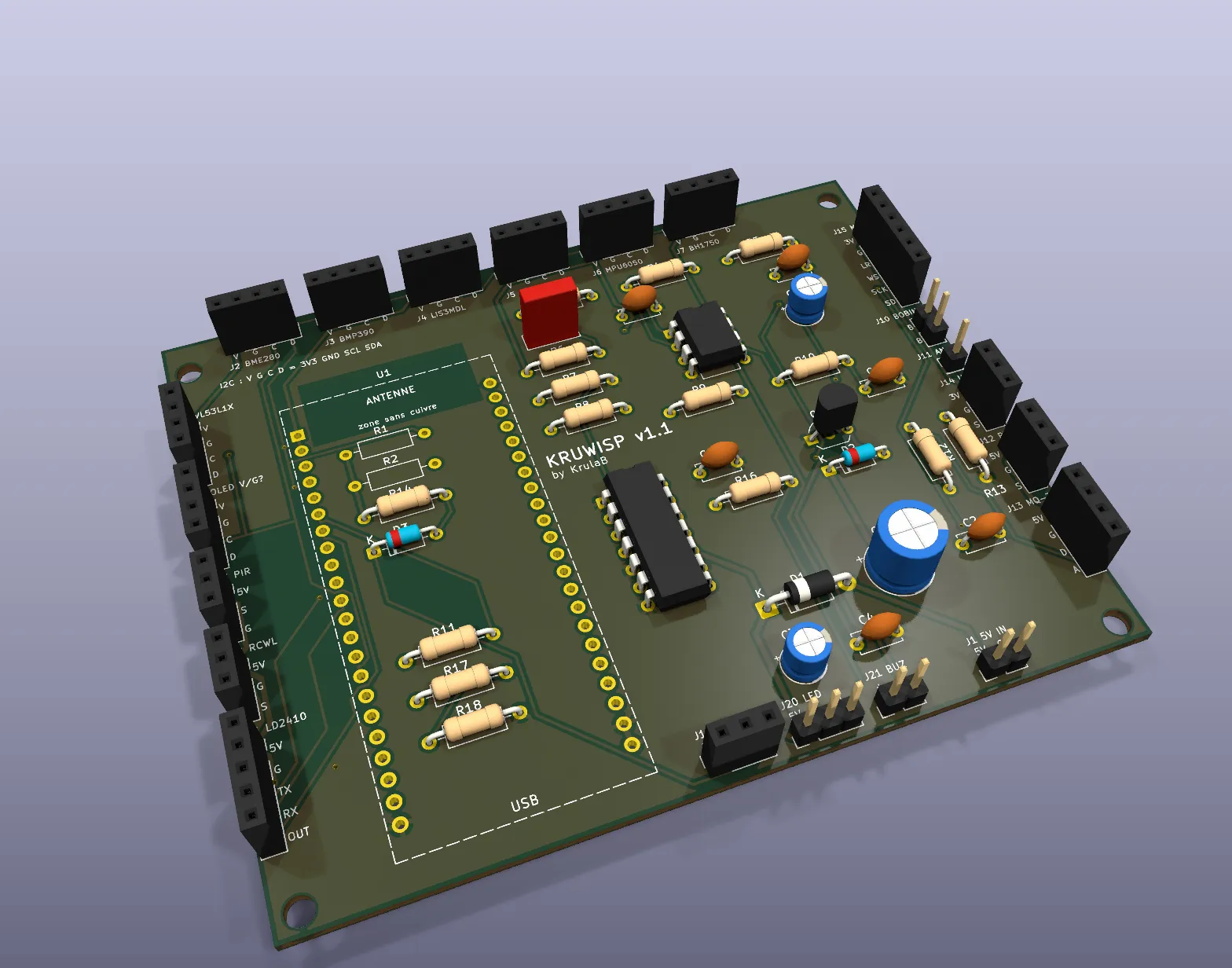
An ESP32-S3 that detects the connected sensors by itself, a carrier board drawn by code then auto-routed, a parametric 3D-printed case, and a web app that merges the box and the phone. The readings also go up to Home Assistant.
03 · THE METHOD
Baseline, measured deviations, cross-checking. Each event is classified as explained, isolated, unexplained multi-sensor or CO danger, with the list of causes to check. Everything exports to CSV for a calm analysis afterwards.
04 · ITS LIMITS, OWNED
Kruwisp detects nothing supernatural: it only says “I can't find an ordinary explanation”, and that is where checking starts. The CO sensor gives a trend, not a measurement: it does not replace a certified detector. And the radar also detects… the person measuring.